Gallery wall
A panelled dining room wall, drawn in full-size paper and agreed in the room before anything was fixed.
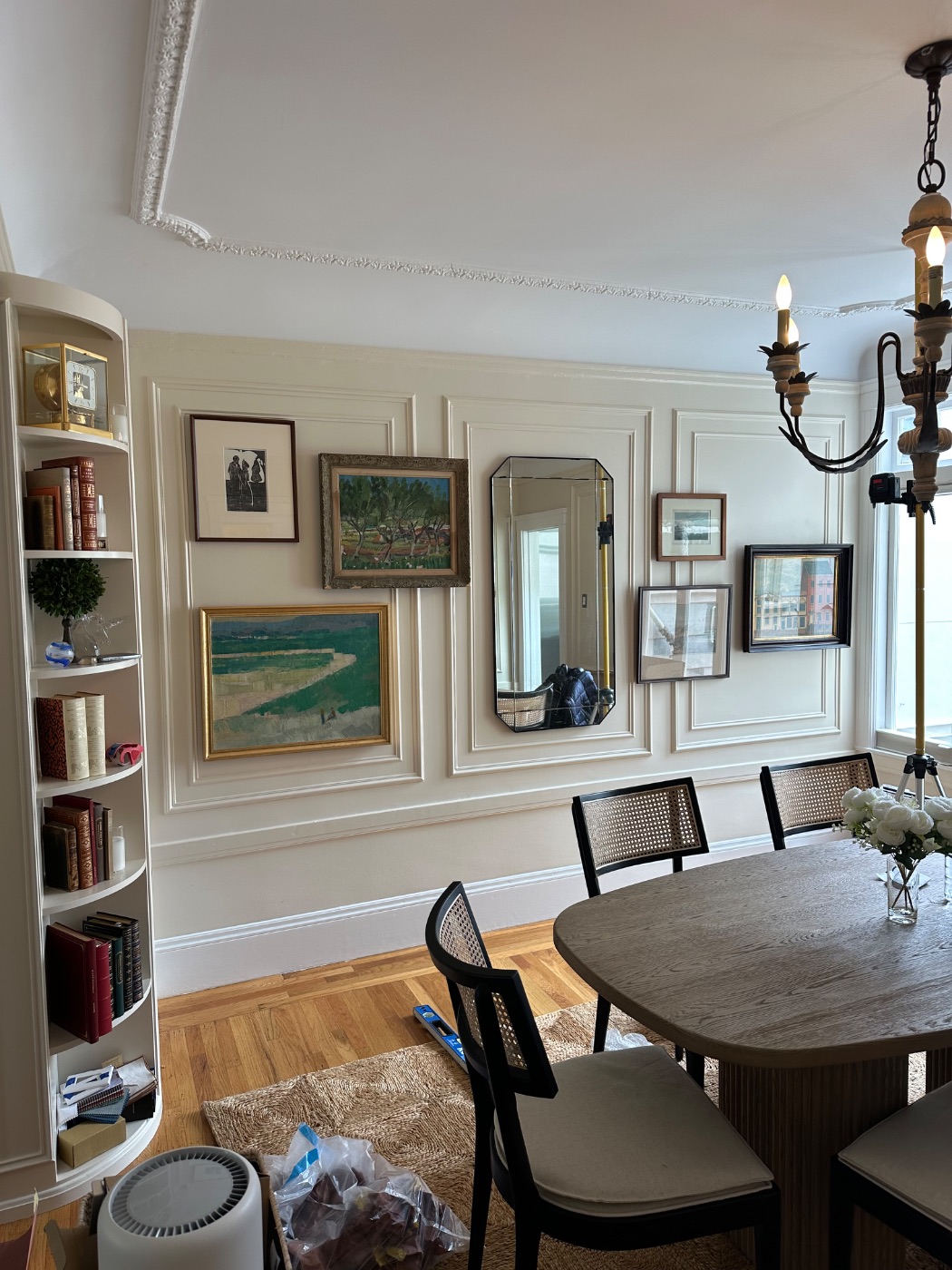
A dining room in an Edwardian flat, panelled the full width of one wall, with a plaster cornice above and a faceted antique mirror already set in the centre panel. The owners had collected steadily and quietly: two oils of the Mediterranean coast, a wooded landscape, an etching, a small harbour scene, framed in gilt, olive wood and plain black. They wanted the collection in the room where people sit longest.
Panelling composes a wall before any art arrives. Each moulded rectangle is a frame the architecture has already drawn, and works placed without regard for it read as a mistake, however good they are. The composition was therefore built against that geometry, with the mirror kept as the centre it had always been, and works allowed to cross a moulding only where the arrangement genuinely called for it.
Every work was cut to size in paper and taped up first. The owners lived with the paper wall across an afternoon, saw it under the chandelier and in daylight from the bay window, and moved two pieces before anything was agreed. Only then were the fixings set. Nothing goes into a plaster wall on a guess.
How it went up
Paper first, then the wall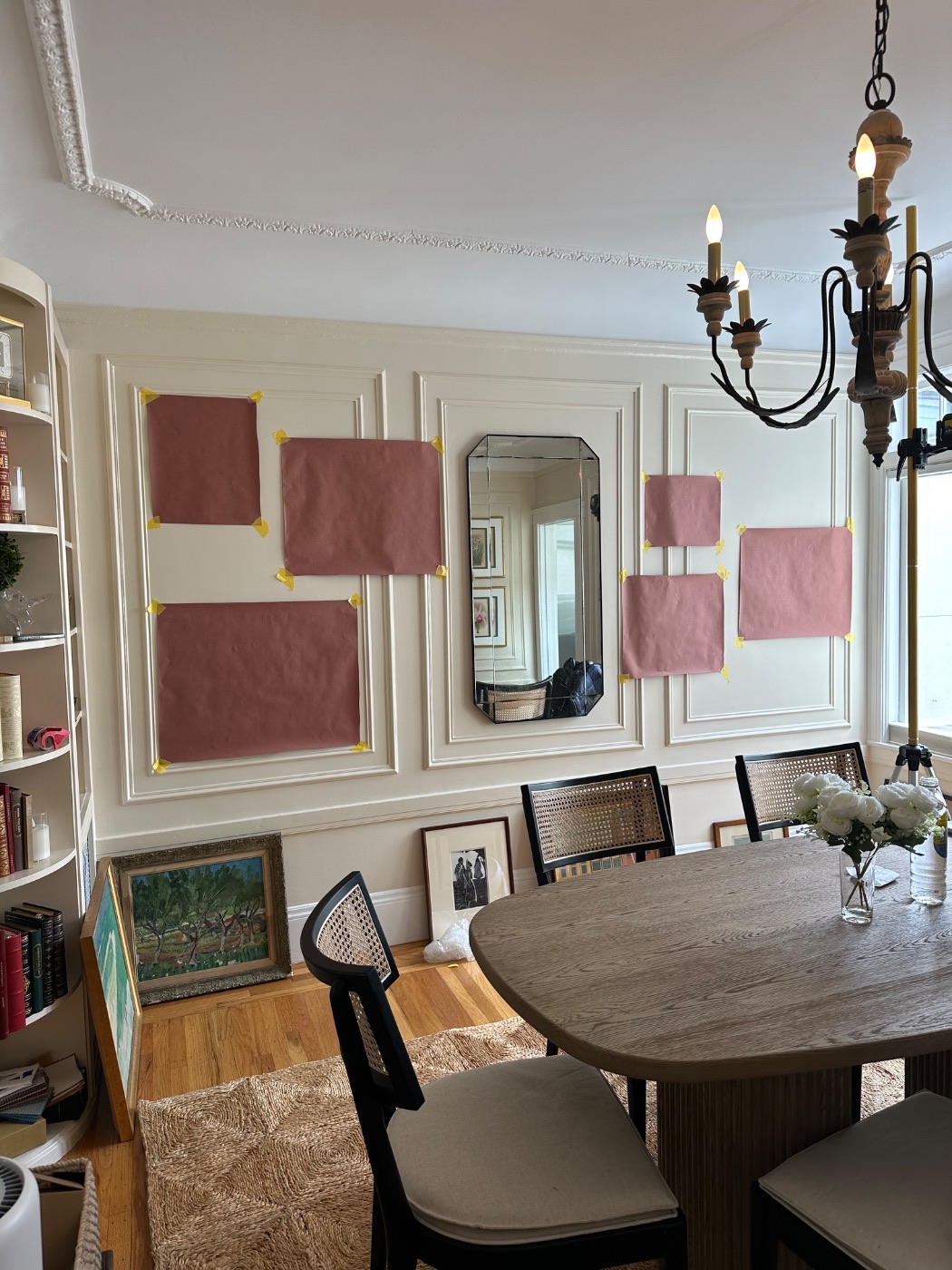
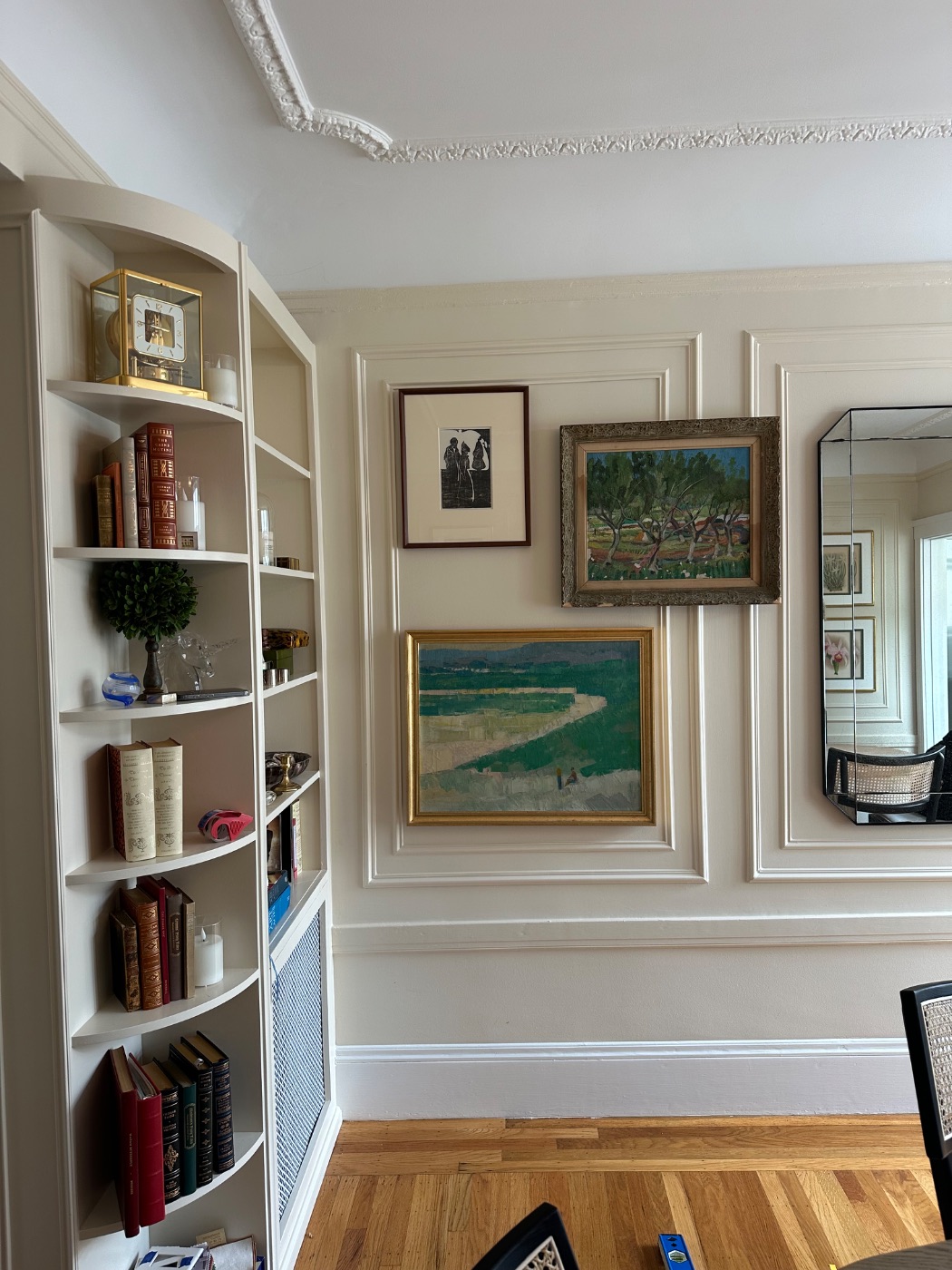
The wainscoting. The composition the room wanted did not line up with the panelling it already had, so several works land across a raised moulding rather than on flat plaster. That changes the hanging entirely: fixings go into anchors, set to hold through the profile of the moulding, and each one is placed to the millimetre so the frame sits square and centred over the raised line instead of riding up on it. The paper templates were adjusted on the wall until every piece sat perfectly over the moulding, and only then was anything drilled.