Double-height gallery wall
A double-height plaster wall, composed to be read from the floor and from the level above.
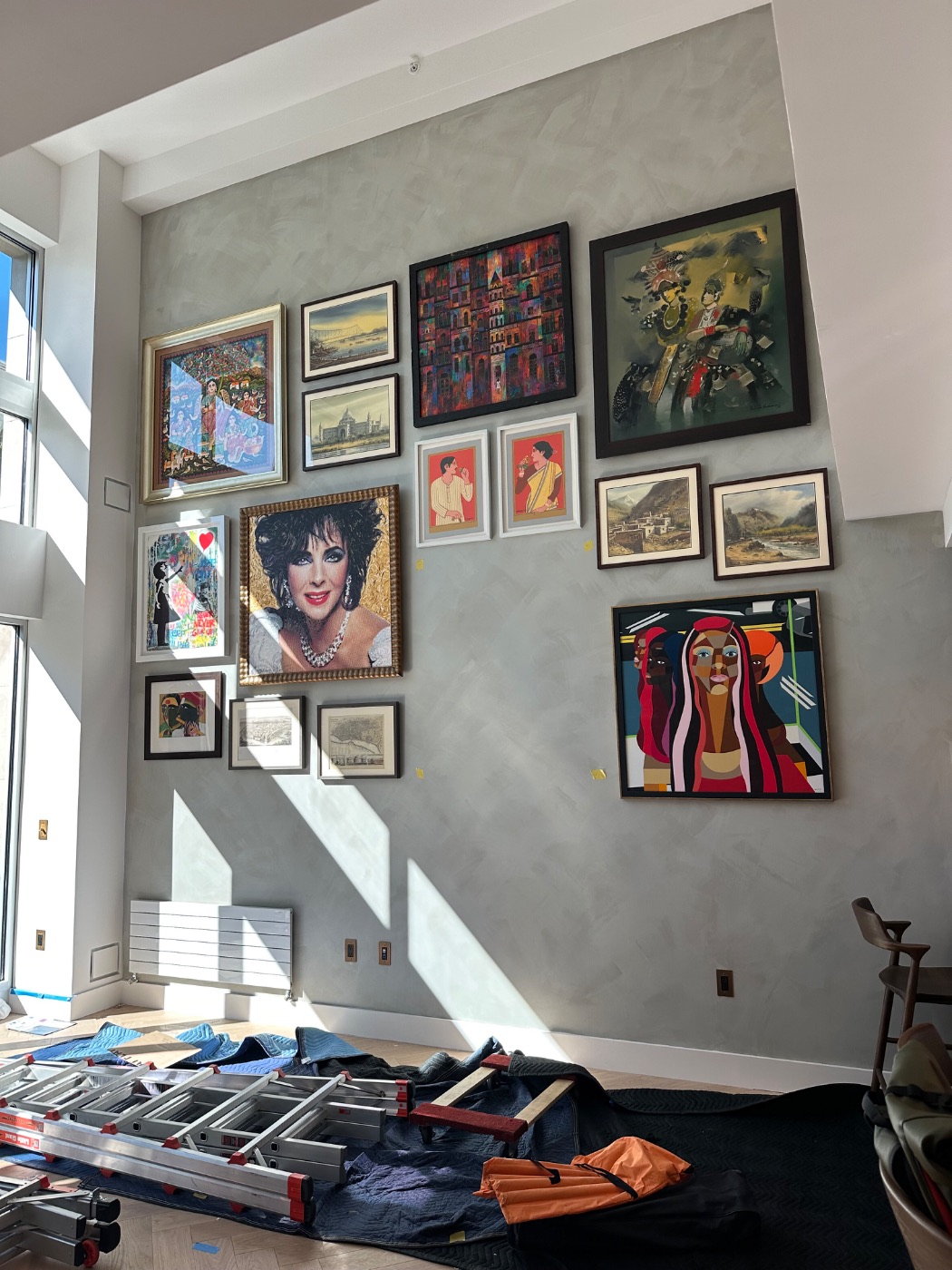
A double-height wall in polished plaster, eighteen feet from skirting to ceiling, with glazing down one side and the upper level open to it. The owners had a collection they had been adding to for years and wanted the whole of it on this one wall.
A wall this tall is never seen whole. From the room you read the lower half at a steep angle. From the level above you are level with the top and looking down across the rest. Both views had to resolve, which is what decided the composition rather than any rule about hanging heights.
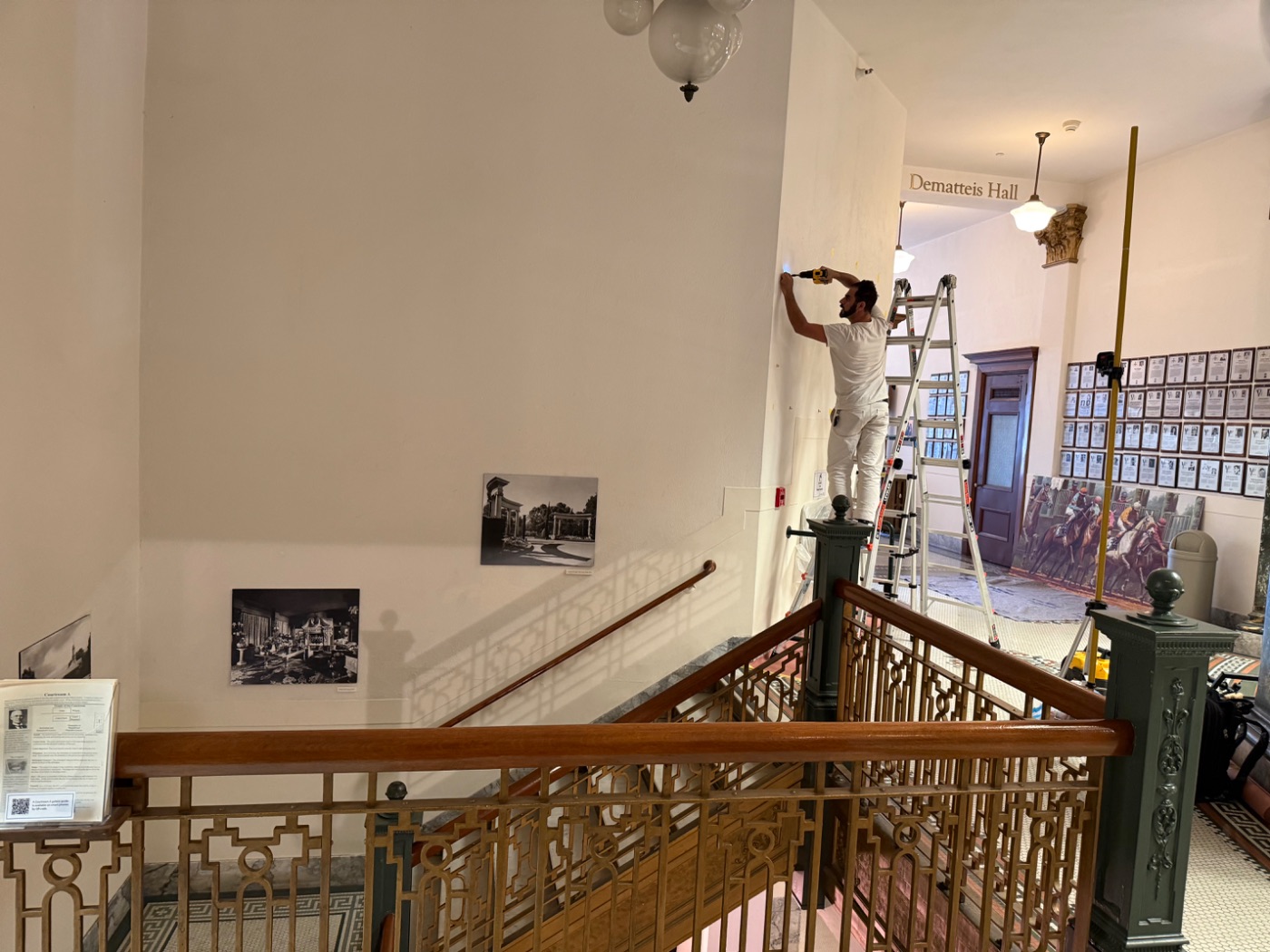
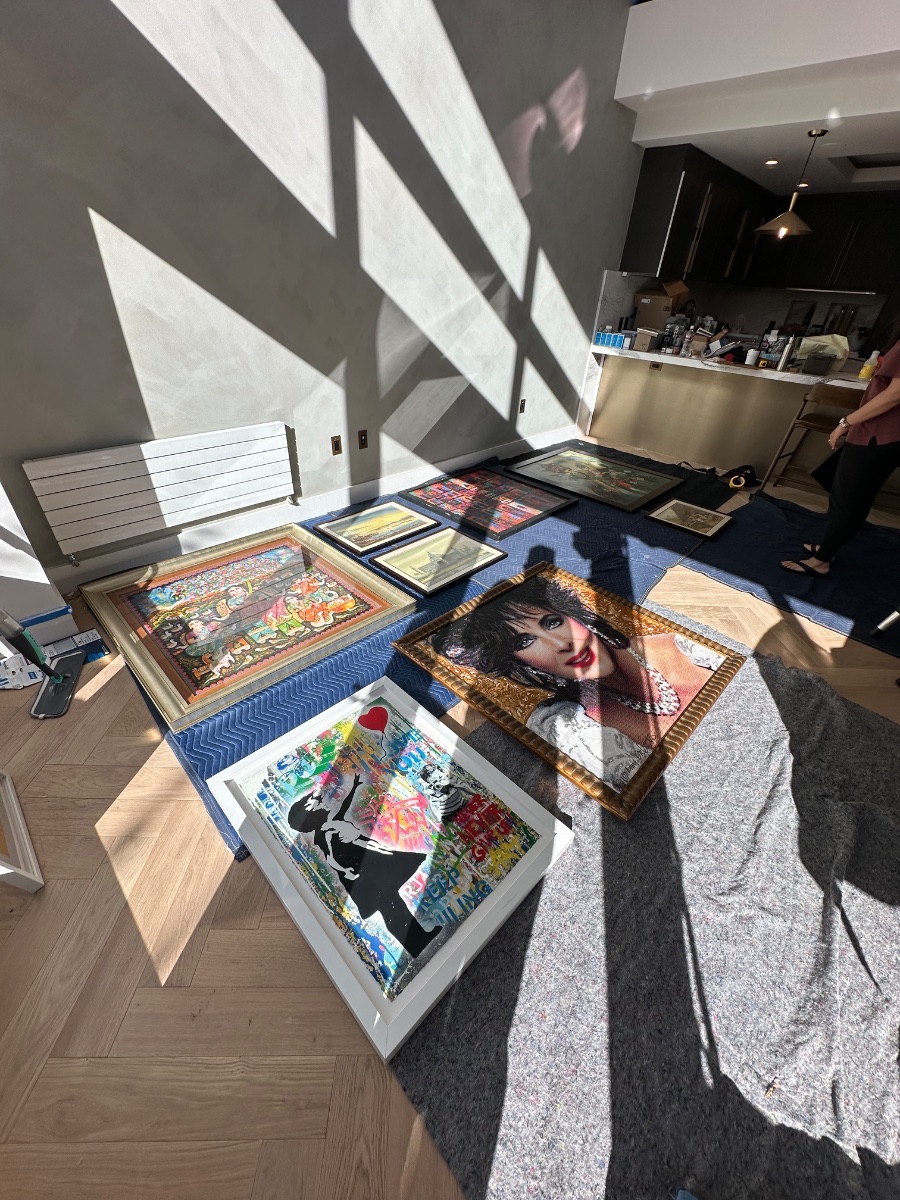
Polished plaster does not forgive a second attempt, so nothing was fixed until the order was settled. The works were laid out on the floor, sequenced there, and then set from a single anchor piece with every subsequent position measured from it. The light crossing the wall through the afternoon also had a say: anything under glass went where the sun would not sit on it.
How it went up
Bare plaster to composition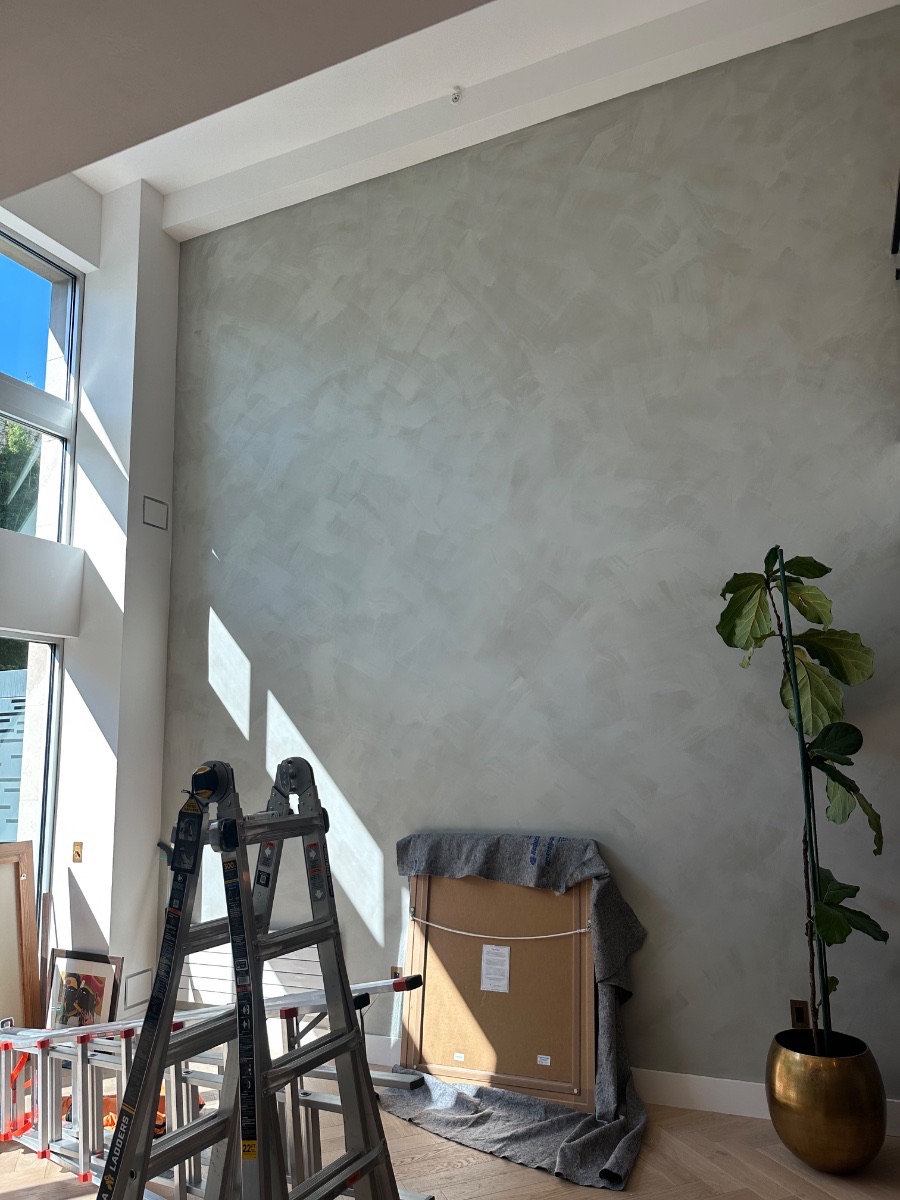
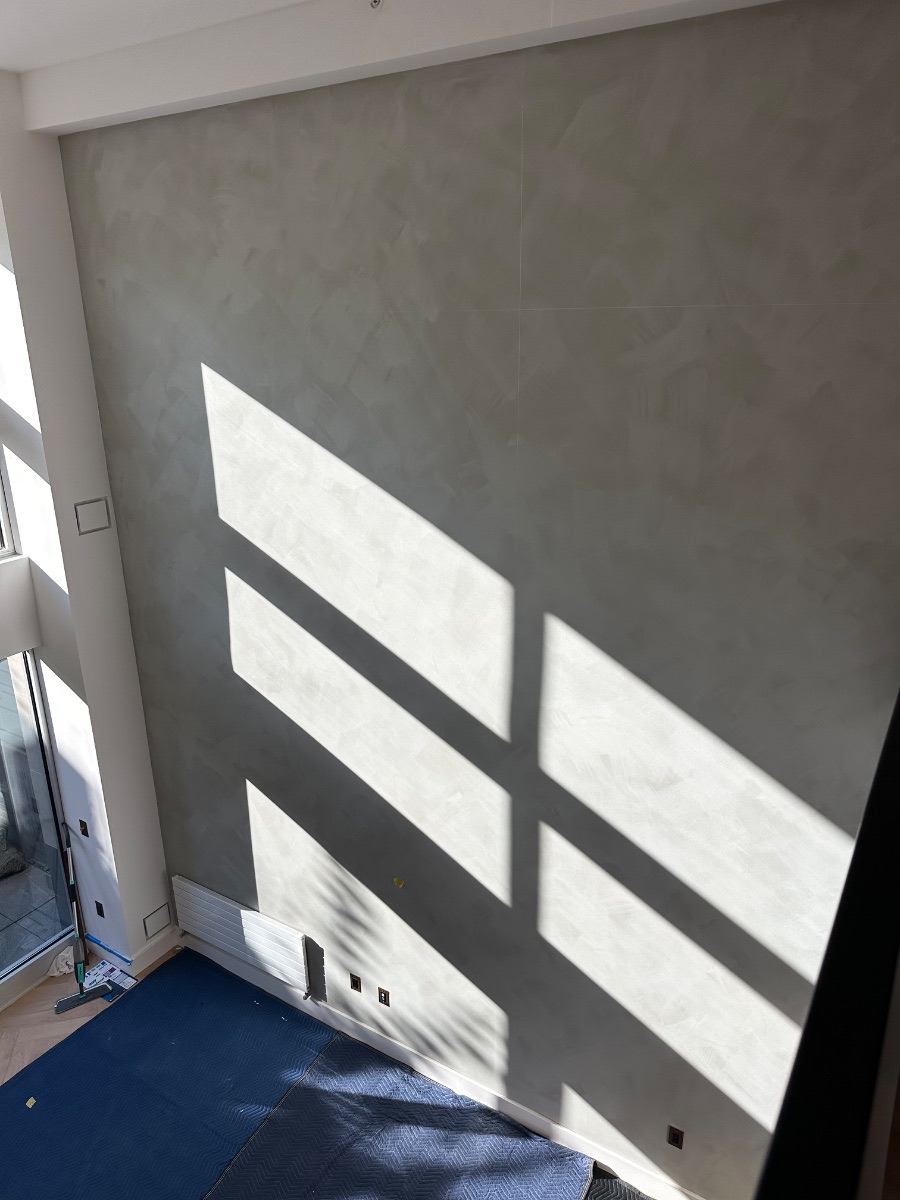
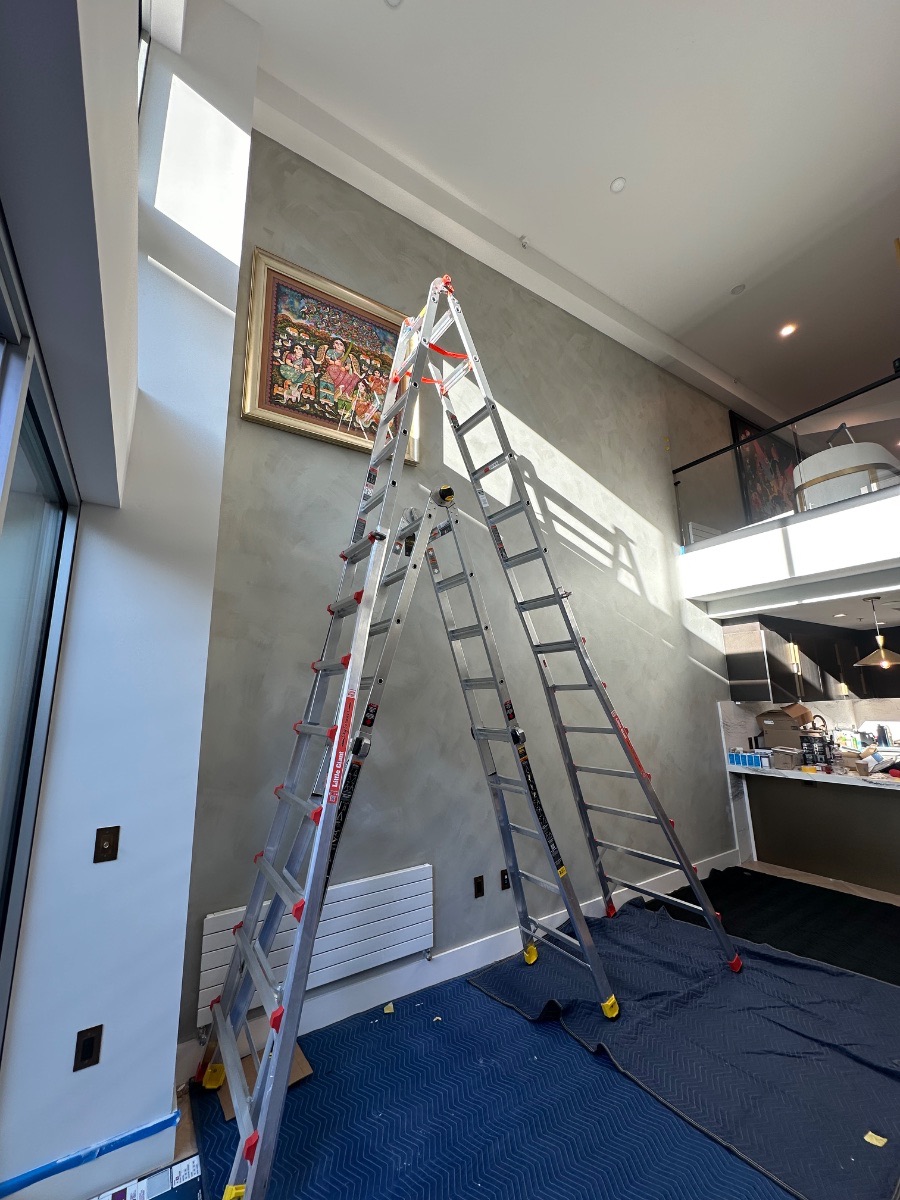

The top half is the half nobody can check from the floor. Spacing that looks generous at eye level opens into gaps when read from eighteen feet below, so the upper works sit closer together than the lower ones and hold as a group rather than drifting. Sizes were graded too, with the larger pieces carried upward, which keeps the composition from going top-light as it rises.